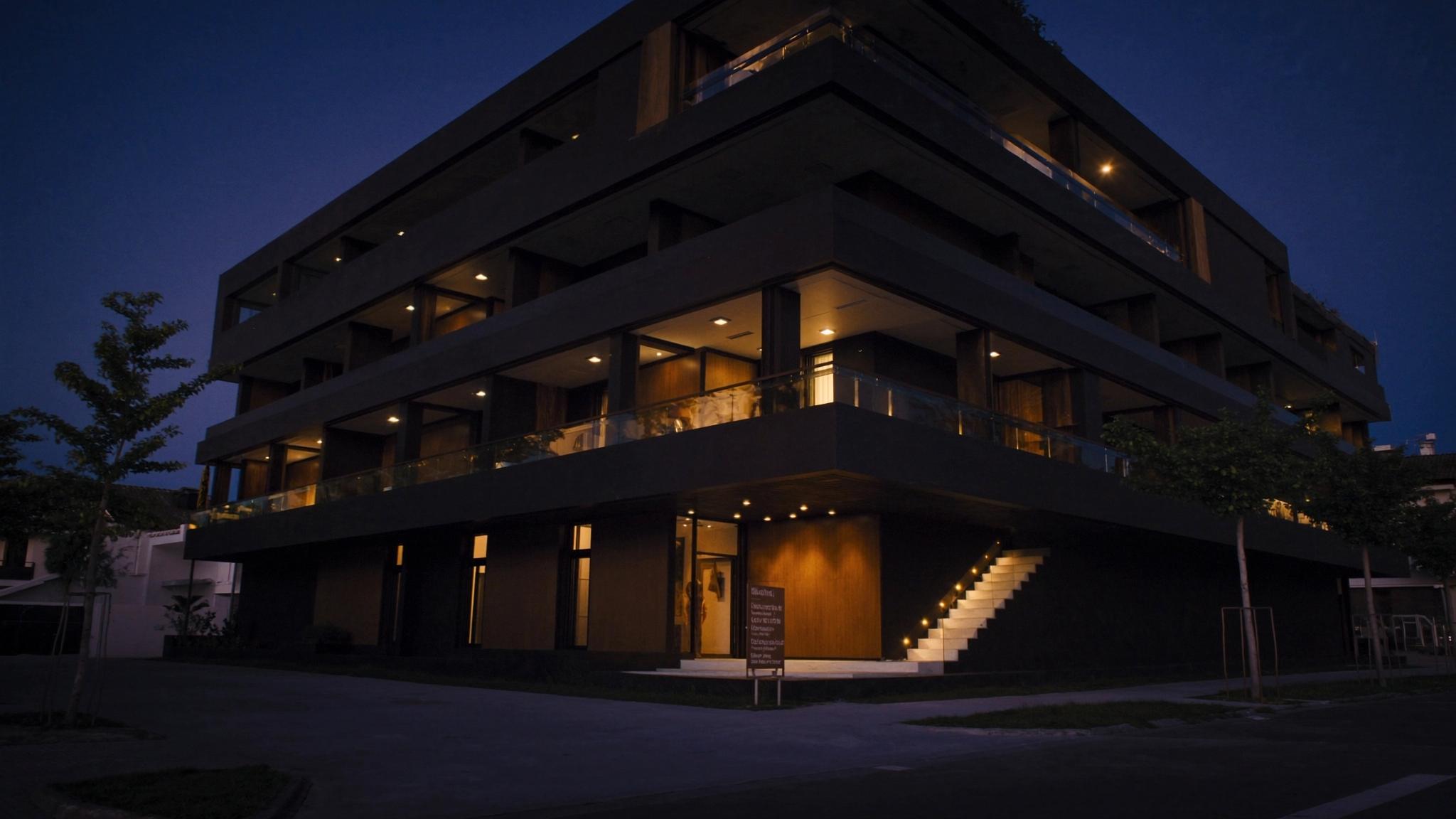
What is a multi-family hard money loan?
A multi-family hard money loan is a short or medium-term loan secured by an apartment building, underwritten on the building’s value, its rent roll and the borrower’s exit rather than on tax returns. The lender is a private capital source, not a bank, so the decision turns on three questions: what is the property worth today and after the plan, how much equity sits beneath the loan, and how does the loan get paid off.
The distinction from a bank loan is speed and flexibility, not the collateral. A bank underwrites the borrower’s global cash flow over months and wants a stabilized, fully occupied asset before it commits. A hard money lender underwrites the asset and the plan, so a half-empty building, a partially renovated one or a purchase that has to close in days can still be financed. The price of that flexibility is a higher rate and a shorter term, which is why every multi-family hard money loan is written with the take-out already in view.
At Loan Goat, multi-family sits in two places: the commercial loans program, where the multi-family loan covers 2-200 unit apartment buildings on hybrid terms, and the rental property loans program, where the multifamily term and rental portfolio loans hold stabilized buildings for the long term. Bridge situations that need the fastest close run through the bridge loans program.
Multi-family property types
Every apartment building is a multi-family property, but lenders sort them into groups because the underwriting and the take-out differ.
Apartment buildings
The standard case: a stabilized building with a rent roll, an operating statement and market-rate tenants. Value is driven by net operating income and the cap rate buyers apply to it, so the lender’s first questions are about rents, vacancy, expenses and deferred maintenance.
5+ units
Five units is the line where residential financing ends and commercial financing begins. A 2-4 unit building can be financed on residential products (the bridge, fix and flip and rental DSCR programs all list 2-4 units); a 5+ unit building is a commercial asset and is valued on income. Loan Goat’s mixed-use loan is written for 5-8 unit buildings with retail or office below, and the multi-family loan runs from 2 to 200 units.
Senior living
Independent living and age-restricted communities are apartment buildings with an older tenant base and, in some cases, services attached. When care is licensed the asset becomes an operating business as much as a building, which is covered on the assisted living page. Without licensed care it is underwritten as multi-family with a note on the lease structure.
Student housing
Buildings leased by the bed near a campus. The income is strong but seasonal and the tenant turns over every year, so lenders look hard at the leasing calendar, parental guarantees and the distance to campus. A bridge loan through the summer lease-up is a common structure.

Why investors use multi-family hard money loans
- A purchase that will not wait. Off-market buildings, estate sales and sellers who have been burned by a bank fallout want a buyer who closes in days. A hard money bridge lets an investor perform like a cash buyer and refinance later.
- Value-add with vacancy. A building at 60% occupancy or with below-market rents does not qualify for agency debt until it is stabilized. Hard money funds the purchase and the renovation, then the stabilized building refinances into a term loan.
- Cash-out for the next deal. An owner with equity in a stabilized building pulls capital out to buy the next one. Loan Goat’s multi-family loan lists cash out refinancing among its published uses.
- Bank fallout at the finish line. A bank that retrades or withdraws a week before closing leaves the buyer with a hard deposit at risk. A bridge closes the purchase on the original date and the bank loan is replaced later.
- Partner buyouts and recapitalizations. When one owner wants out, a bridge against the building pays the departing partner and the remaining owner refinances once the cap table is clean.
Purchase, refinance and construction
Multi-family purchase loans
A purchase bridge is sized against the purchase price and, on a value-add deal, the cost of the work. Loan Goat’s bridge program covers multifamily up to $25,000,000 at up to 70% LTV on commercial property, on one or two year terms, and the small balance structure adds money for post-close rehab work if applicable. The program publishes no prepayment penalty, which matters when the plan is to refinance as soon as the building stabilizes.
Multi-family refinance loans
A refinance replaces a matured loan, a maturing construction loan or an expensive bridge, or pulls equity out of a building the owner intends to keep. On a stabilized building the multifamily term loan refinances up to 80% LTV on 5, 7, 30 and 40 year fixed terms with rates from 6.50% on the Non-QM tier, and the rental portfolio loan does the same across 5+ rental properties or units, consolidating multiple loans into one. Where the building is not yet stabilized, a bridge refinance holds it until it is.
Multi-family construction loans
Ground-up apartment construction is financed in stages: land, vertical construction and lease-up. Loan Goat’s ground-up construction program is written for SFR, condo or townhome and 2-4 unit projects, with a 2 Ground-Up Projects experience requirement and up to 80% LTC on 12 to 18 month terms. Larger apartment construction and major rehabilitation run through the large balance bridge, whose published focus is construction, transitional financing and major rehabilitation projects. In every case the draws follow the work, and the exit is a permanent loan on the finished, leased building.
Pricing and terms
Loan Goat prints its multi-family terms on the product cards, and this page repeats only those figures. The multi-family loan: rates from 7.90% private and 6.00% institutional, terms of 1, 2, 3 and 15 years, LTV up to 70%. The multifamily term loan: 5, 7, 30 and 40 year fixed terms, LTV up to 80%, rates from 6.50% on the Non-QM tier. The large balance bridge, on the bridge program’s terms: one or two years, LTV up to 70% on commercial property, loans from $150,000 to $25,000,000, rates from 9.00% to 13.00%. The full cards, with the requirements and benefits exactly as published, are printed below this article.
What is not printed is quoted per deal: points, lender fees, third-party costs, the rate on a specific file and the leverage a specific building supports. Leverage on multi-family is set by the lower of the appraised value and the purchase price, tested against the debt service the rents can carry. Rates and pricing are subject to change without notice and are not a commitment to lend; the pricing guide explains what moves a quote up or down.
Requirements
Property conditions
- A 2-200 unit apartment building or community in a metropolitan area with 250K+ population, stabilized with at least two units, for the multi-family loan.
- A current rent roll and a trailing operating statement, or a credible pro forma with the renovation budget on a value-add deal.
- Clean title, insurable and free of environmental issues that would block a permanent lender.
- A commercial appraisal where the program requires one; the hard money commercial bridge publishes that on some cases appraisal is not needed.
Borrower conditions
- A minimum credit score of 620 on the multifamily term and rental portfolio loans and 650 on every bridge structure.
- Landlord experience on the term and portfolio loans; comparable experience on the large balance bridge; none required on the small balance bridge.
- Liquidity for the down payment, closing costs and reserves, shown with proof of funds.
- A clear exit: sale, refinance or stabilization, with the numbers that support it.
Entity
Investment property loans are usually vested in an LLC, corporation or trust, with the principals signing a personal guarantee. Bring the formation documents, the operating agreement and the list of members with their ownership percentages; vesting and guarantee requirements are confirmed on the Letter of Intent.

Exit strategy
A multi-family hard money loan is a bridge to one of four destinations, and the destination is agreed before funding.
- Agency or bank permanent loan. Once the building is stabilized, a long-term loan pays off the bridge. This is the most common exit and the one lenders underwrite to.
- Loan Goat term loan. The multifamily term and rental portfolio loans are written as the take-out for a stabilized building, so the bridge and the permanent loan can come from the same lender.
- Sale. A value-add investor who renovates, raises rents and sells to a long-term holder repays the loan from the sale.
- Condo conversion or unit sales. Where the entitlement allows it, selling the units individually retires the loan in tranches.
The 1031 exchange scenario is where the sale exit and the purchase bridge meet: the proceeds of one building buy the next inside the exchange window.
Where multi-family fits at Loan Goat
- Commercial loans for the multi-family loan and the mixed-use 5-8 unit loan.
- Rental property loans for the multifamily term and rental portfolio loans.
- Bridge loans for the small and large balance bridges and the hard money commercial bridge.
- Cash offers only when the seller will not take a financed offer.
- Mixed-use when there is retail or office on the ground floor.
Conclusion
Multi-family is the asset class hard money was built for: the income is measurable, the exit is a known product and the speed of a private lender is worth real money to a buyer competing with cash. Send the address, the rent roll and the plan, and Loan Goat will tell you the same day which program fits and what it takes to close.