What is a mixed-use hard money loan?
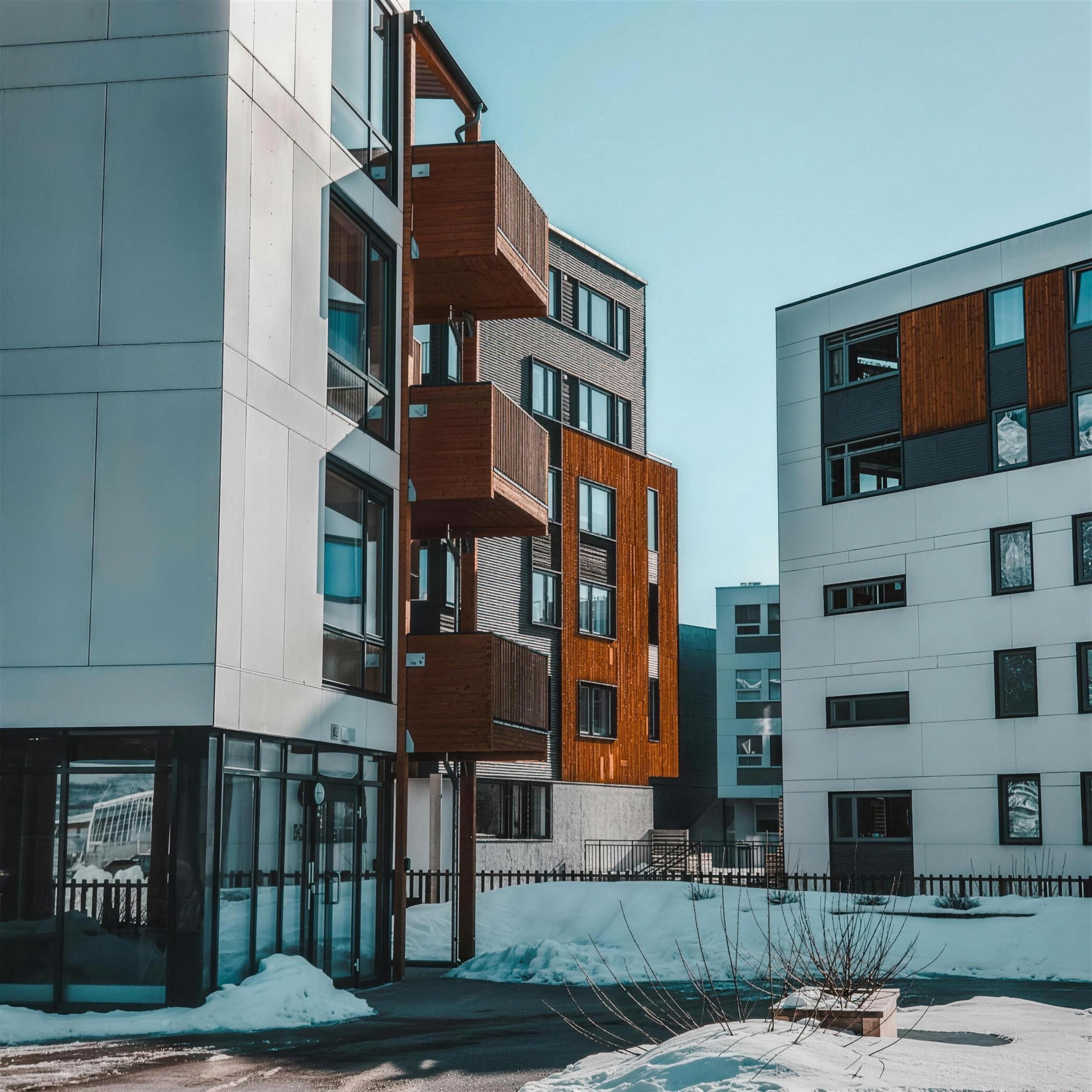
A mixed-use hard money loan is a short or medium-term loan secured by a building that combines residential and commercial uses, underwritten by a private lender on the building’s value, its combined income and the borrower’s exit. The classic form is a two to four storey building on a commercial corridor: a restaurant, a salon or an office on the ground floor and apartments above.
The reason these buildings end up with private lenders is structural. A bank underwrites residential and commercial income with different rules, and a building that mixes them lands between two departments. Add a vacant storefront, a month-to-month commercial tenant or a partially finished renovation and the bank file stalls. A hard money lender looks at the whole asset: what the apartments rent for, what the commercial space rents for or could rent for, what the building is worth today and after the plan, and how the loan gets paid off.
At Loan Goat, mixed-use is covered from two directions. The commercial loans program carries the mixed-use loan for 5-8 unit properties, a hybrid-term loan on stabilized buildings with retail or office below. The bridge loans program carries the small balance and large balance bridges, both of which list mixed-use among their property types, for the buildings that are not stabilized yet.
Mixed-use property types
Retail below, residential above
The standard mixed-use building. The residential units carry the income and the commercial unit carries the risk, because commercial vacancy lasts longer and tenant improvements cost more. Lenders look at the ratio: a building that is 80% residential by income is underwritten close to an apartment building; one that is 60% commercial is underwritten close to a retail property.
Office over retail, apartments over office
Downtown and main-street buildings often stack three uses. Each floor has its own lease structure, its own tenant profile and its own vacancy risk, and the value is the sum of the parts. These buildings suit hybrid term loans once stabilized and bridge loans while any floor is in transition.
Live-work and converted buildings
Former warehouses, corner stores with owner apartments and buildings converted from a single use to several. Zoning, permits and the certificate of occupancy matter more here than anywhere else in this category; a lender wants to see that every use is legal before it sizes the loan.
5-8 unit buildings
The size band where Loan Goat publishes a dedicated product. Five to eight units over commercial space is too small for institutional capital and too complicated for a residential lender, which is exactly the gap the mixed-use loan fills.
Why investors use short-term hard money on mixed-use
- A purchase with high vacancy. An empty storefront or two vacant apartments makes the building unfinanceable at a bank and cheaper to buy. A bridge funds the purchase on the current numbers; leasing during the term creates the value.
- A partially finished building. A seller who ran out of money mid-renovation sells at a discount to a buyer who can close fast and finish the work. The small balance bridge publishes money for post-close rehab work if applicable.
- Ground-floor commercial with residential above that a bank will not touch. Month-to-month commercial tenants, a restaurant lease, a cannabis-adjacent tenant or a use the bank’s credit policy excludes. A private lender prices the risk instead of declining it.
- Speed. Mixed-use buildings on good corridors sell to cash buyers. Loan Goat’s standard is to process and close a loan in 5-7 days, and the hard money commercial bridge publishes a close in as quickly as 3 days.
- Cash-out for the next building. The mixed-use loan publishes purchase, refi and cash out programs, so equity in a stabilized building can fund the next acquisition.
Purchase, refinance and construction
Purchase
A stabilized 5-8 unit building in a metro area goes straight to the mixed-use loan: from 7.90%, up to 70% LTV, on terms of 1, 2, 3 and 15 years out to a 25-year amortization. A building in transition goes to the bridge program, up to 70% LTV on commercial and $25,000,000 on one or two year terms, with rates from 9.00% to 13.00% and no prepayment penalty. Either way the file is decided on the building and the plan, with no borrower experience required on the small balance bridge.
Refinance
A refinance replaces a maturing loan, takes out a bridge once the storefront is leased, or pulls cash from a building the owner will keep. The mixed-use loan publishes a cash out refinance program, and the multifamily term loan lists mixed use among its property types at up to 80% LTV with rates from 6.50% on the Non-QM tier on 5, 7, 30 and 40 year fixed terms. Which one fits depends on the income mix and the hold period.
Construction and conversion
Ground-up mixed-use and full conversions are transitional projects: the loan is sized on cost and the finished value, drawn as the work is completed, and repaid by a term loan or a sale on the finished building. The large balance bridge publishes construction, transitional financing and major rehabilitation projects as its focus, on the bridge program’s one or two year terms and loans up to $25,000,000.
Pricing and terms
Only Loan Goat’s published figures appear on this page. The mixed-use loan for 5-8 unit properties: rates from 7.90% private and 6.00% institutional, terms of 1, 2, 3 and 15 years, LTV up to 70%, with flexible credit parameters and no age restrictions on the property. The small balance bridge, on the bridge program’s terms: one or two years, LTV up to 70% on commercial property, loans from $150,000 to $25,000,000, rates from 9.00% to 13.00%, minimum credit score 650, no prepayment penalty. The full cards are printed below the article.
Everything else is quoted per deal: points, lender fees, third-party closing costs, the rate on a specific file and the leverage a specific building supports. On mixed-use the leverage question is driven by the income split and the lease terms on the commercial space, which is why two buildings with the same price can carry different loans. Rates and pricing are subject to change without notice and are not a commitment to lend; the pricing guide walks through what moves a quote.
Requirements
Property conditions
- Stabilized apartment space with retail or office, in a metro area of 250k+ population, for the mixed-use loan.
- A rent roll for the residential units and copies of the commercial leases, with the remaining term and any options.
- Legal use: zoning, the certificate of occupancy and permits for any conversion or addition.
- Clean title and insurable condition; a commercial appraisal where the program requires one.
Borrower conditions
- A minimum credit score of 650 on every bridge structure; flexible credit parameters on the mixed-use loan.
- No borrower experience required on the small balance bridge; comparable experience on the large balance bridge.
- Proof of funds for the down payment, closing costs and reserves, and a plan for the commercial vacancy if there is one.
- An exit the numbers support: lease-up and refinance, or sale.
Entity
Investment property loans are usually vested in an LLC or corporation with the principals as guarantors. Bring the formation documents and the ownership schedule; vesting and guarantee requirements are confirmed on the Letter of Intent.
Exit strategy
- Refinance into a hybrid term loan. Once the commercial space is leased and the rents are proven, the mixed-use loan or the multifamily term loan takes out the bridge. Loan Goat writes both, so the bridge and the take-out can come from the same lender.
- Refinance into a bank or agency loan. A fully stabilized building with seasoned leases qualifies for bank debt, and the bridge is repaid at that closing.
- Sale. A value-add investor who leases the storefront, renovates the units and sells to a long-term holder repays the loan from the sale, often into a 1031 exchange.
- Condo or unit sales. Where the building can be subdivided, the units are sold individually and the loan is repaid in tranches with release prices.
Where mixed-use fits at Loan Goat
- Commercial loans for the mixed-use 5-8 unit loan and the retail, office and industrial loan.
- Bridge loans for the small balance, large balance and hard money commercial bridges.
- Multi-family when the building is apartments only; retail and office when the commercial floor dominates.
- Cash offers only when the seller wants a buyer who performs like cash.
Conclusion
Mixed-use is where a private lender earns its place: two income streams, two sets of rules, and a bank that would rather not decide. Loan Goat publishes a product for the 5-8 unit building and bridge loans for everything around it. Send the address, the rent roll and the commercial leases, and you will have an answer on which program fits and what it takes to close.