What is an industrial hard money loan?
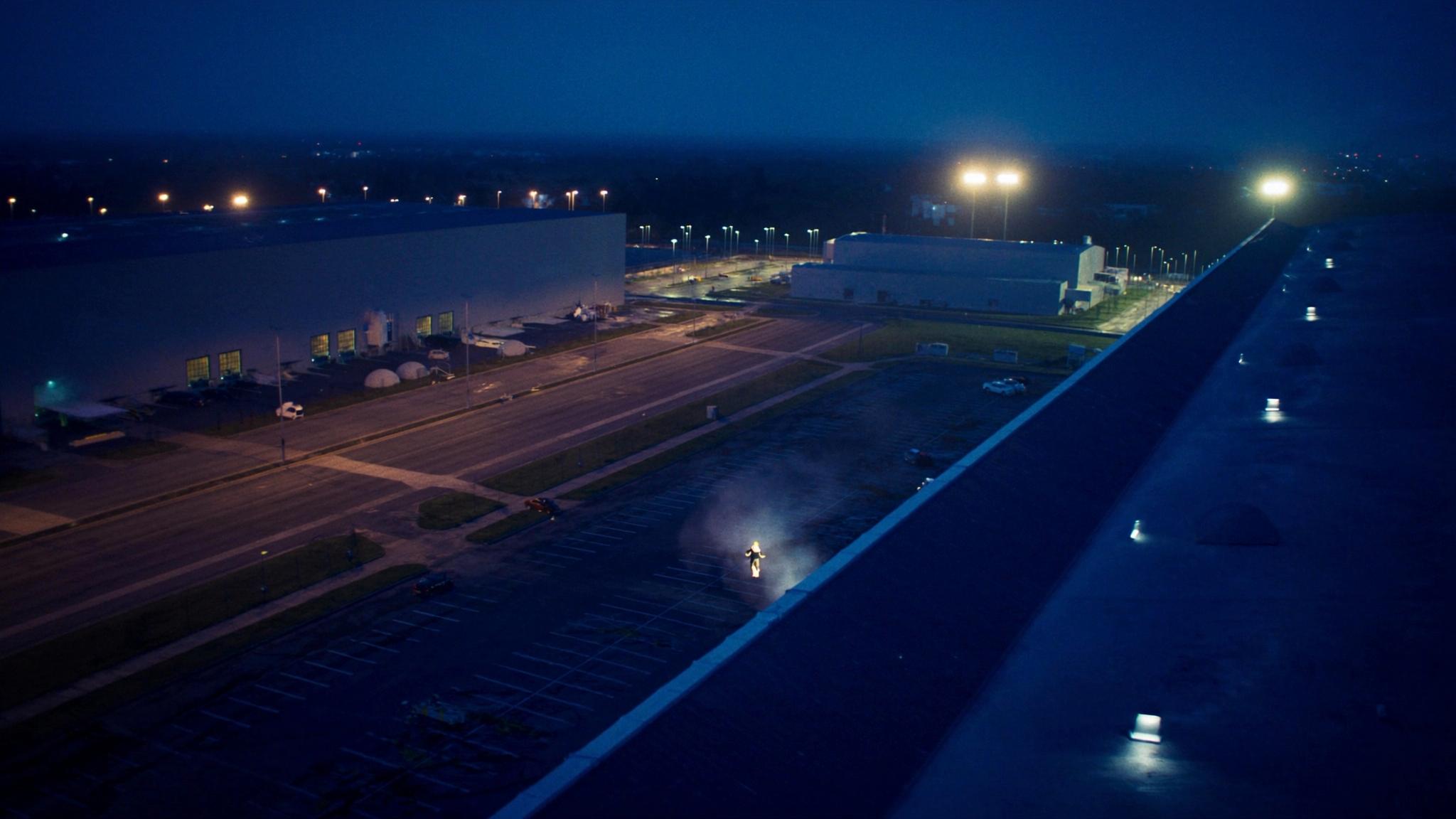
An industrial hard money loan is a short or medium-term loan secured by an industrial property (a warehouse, a distribution building, a manufacturing plant, a cold storage facility or flex space) and underwritten by a private lender on the building’s value, its income or owner use, and the borrower’s exit. It is the loan investors use when the building is vacant, the tenant is leaving, the buyer is an owner-user with a business rather than a rent roll, or the purchase has to close before a bank could finish its file.
Industrial underwriting has its own vocabulary: clear height, dock doors, power, column spacing, truck courts, yard space and zoning decide what a building can be used for and who will lease it. A private lender learns the building first, then the tenant. That order is the opposite of a bank’s, and it is why a vacant 40,000 square foot warehouse with 28 foot clear height and good truck access is an easy hard money file and a hard bank file.
At Loan Goat, industrial is carried by the commercial loans program, whose retail, office and industrial property loan writes hybrid terms on stabilized buildings, and by the bridge loans program, where the hard money commercial bridge, the small balance bridge and the large balance bridge all list industrial among their property types.
Industrial property types
Distribution and logistics
Large, tall, dock-heavy buildings near highways, ports and population centers. Valued on location, clear height and loading. The most institutional segment of industrial, and the one where private money appears mostly on speed and transitional deals.
Cold storage
Refrigerated and frozen warehouses serving food, pharmaceutical and floral supply chains. Expensive to build, expensive to convert and scarce, which supports value; the specialised systems make the condition inspection and the tenant’s operations part of the underwriting.
Data centers
Buildings with the power, cooling and connectivity to house servers. Special-purpose and capital-intensive, usually financed by institutions; private lenders see the land, the shell and the conversion stage.
Manufacturing
Plants built around a process: heavy power, cranes, ventilation, floor loads. Often owner-occupied, often financed as a business asset. Valued on the building’s flexibility for the next user as much as on the current one.
Flex space
Small-bay buildings that mix office, showroom and warehouse in each unit, leased to contractors, distributors and light assembly. Multi-tenant, local, and the most common industrial asset in hard money.

Purposes
- Vacant purchase. The building is empty, the price reflects it and a bank will not lend until it is leased. The bridge buys it; the tenant or the owner-user moves in; the term loan follows.
- Bank fallout. A bank that withdraws late in escrow, often over an environmental finding or a tenant’s credit, leaves the buyer with a deposit at risk. The bridge closes on time.
- Rate-and-term refinance. A maturing loan or a bridge that has done its job is replaced by a hybrid term loan on the stabilized building.
- Cash-out. An owner-user or investor with equity in a building pulls capital for expansion, equipment or the next acquisition.
- Development. Land purchase and the shell construction of a new industrial building, drawn as the work completes and repaid by a lease-up refinance or a sale.
Terms and pricing
Only Loan Goat’s published figures appear on this page. The retail, office and industrial property loan: rates from 7.90% private and 6.00% institutional, terms of 1, 2, 3 and 15 years, LTV up to 70%, eligible tenants credit or non-credit, single tenant and owner occupied on a case-by-case basis, with premium broker rebates paid and flexible tenancy options. The bridge program, which carries the hard money commercial, small balance and large balance bridge structures, on the bridge program’s terms: one or two years, LTV up to 70% on commercial property, loans from $150,000 to $25,000,000, rates from 9.00% to 13.00%, a 650 minimum credit score, and a close in as quickly as 3 days on a clean file. The full cards are printed below.
Points, fees, the rate on a specific building and the leverage it supports are quoted per deal. Industrial leverage is driven by the building’s functionality (clear height, loading, power), its location relative to transport and labour, and the strength of the lease or the owner-user’s business. Rates and pricing are subject to change without notice and are not a commitment to lend. The pricing guide explains the factors.
Requirements
Property
- The building specifications: square footage, clear height, dock and grade doors, power, sprinklers, yard and parking, and zoning.
- A rent roll and lease abstracts for a leased building, or the business plan and financials for an owner-user.
- An environmental report where the use or the history calls for one, and the remediation plan if there is a finding.
- Clean title and insurable condition; a commercial appraisal where the program requires one.
Borrower
- A minimum credit score of 650 on every bridge structure.
- No borrower experience required on the small balance bridge; comparable experience on the large balance bridge.
- Proof of funds for the equity, closing costs and reserves.
- A clear exit: lease-up and refinance, owner occupancy and refinance, or sale.
Entity
The borrower is usually an LLC or corporation with the principals as guarantors; an owner-user often holds the real estate in a separate entity from the operating business, and the lender documents both. Formation documents and the ownership schedule come with the application.
Timeline
Loan Goat’s process is four steps: complete your application, submit required documentation, sign your Letter of Intent, and we process and close your loan in 5-7 days. On industrial the two items that stretch that calendar are the environmental report and the appraisal, so ordering both on day one keeps the close inside the window. Where the hard money commercial bridge applies, the published close is as quickly as 3 days.
Exit strategy
- Refinance into a hybrid term loan. Once the building is leased or occupied, the retail, office and industrial loan takes out the bridge on 1, 2, 3 or 15 year terms.
- Refinance into a bank or SBA loan. An owner-user with a seasoned business qualifies for bank debt or the SBA 7(a) and 504 programs, which cover owner-occupied commercial real estate.
- Sale. Industrial trades deeply to institutional and private buyers, so a stabilized building sells cleanly, often into a 1031 exchange.
- Condo sales. Small-bay industrial condominiums can be sold unit by unit, repaying the loan in tranches.
Where industrial fits at Loan Goat
- Commercial loans for the hybrid-term retail, office and industrial loan.
- Bridge loans for the hard money commercial bridge and the small and large balance bridges.
- Self-storage and land for the two neighbouring asset classes.
- Cash offers only when the seller wants a buyer who closes like cash.
Conclusion
Industrial is bought on function and location, and a private lender underwrites it the same way. Send the address, the specifications and the plan, and Loan Goat will tell you which program fits the building and what it takes to close.